Turn “let’s test this” into measurable outcomes.

A step-by-step framework to align your team, define what matters, and make sure your intelligent detection  project delivers real operational and safety value.


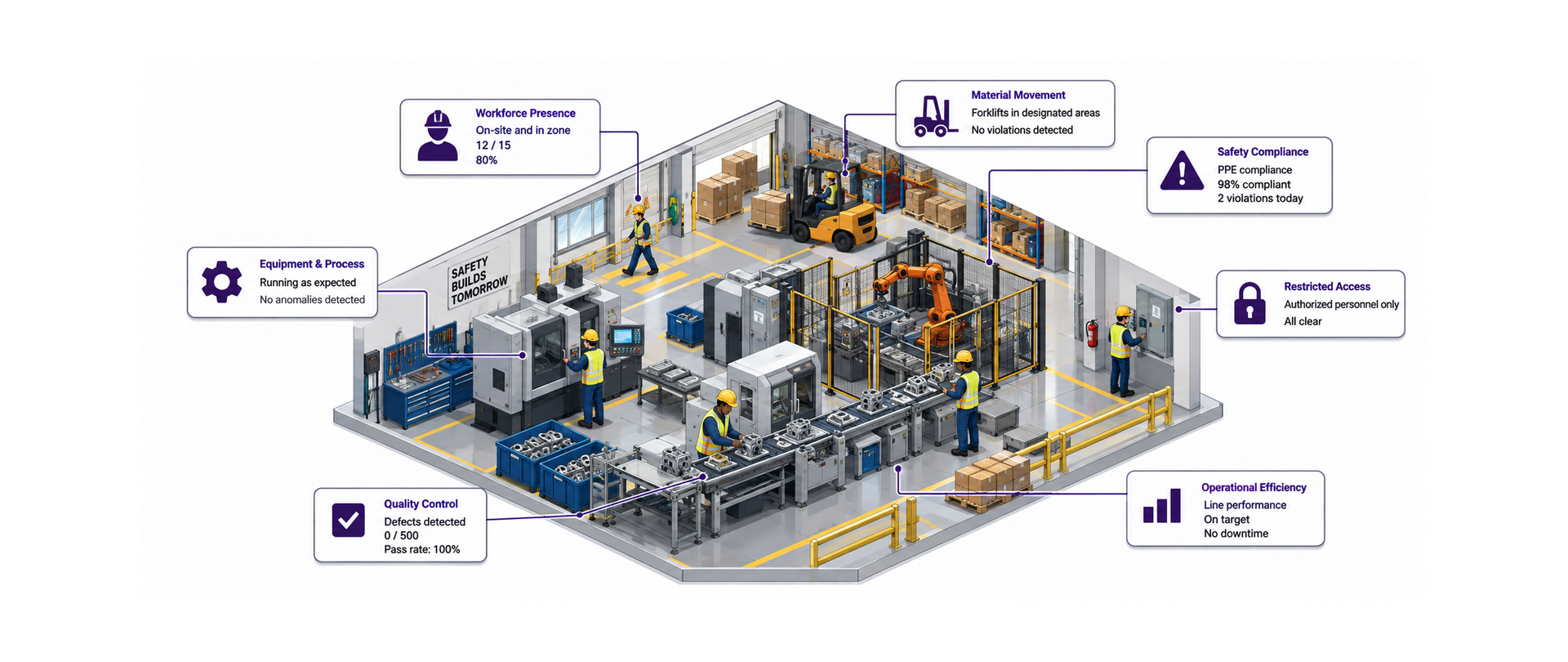
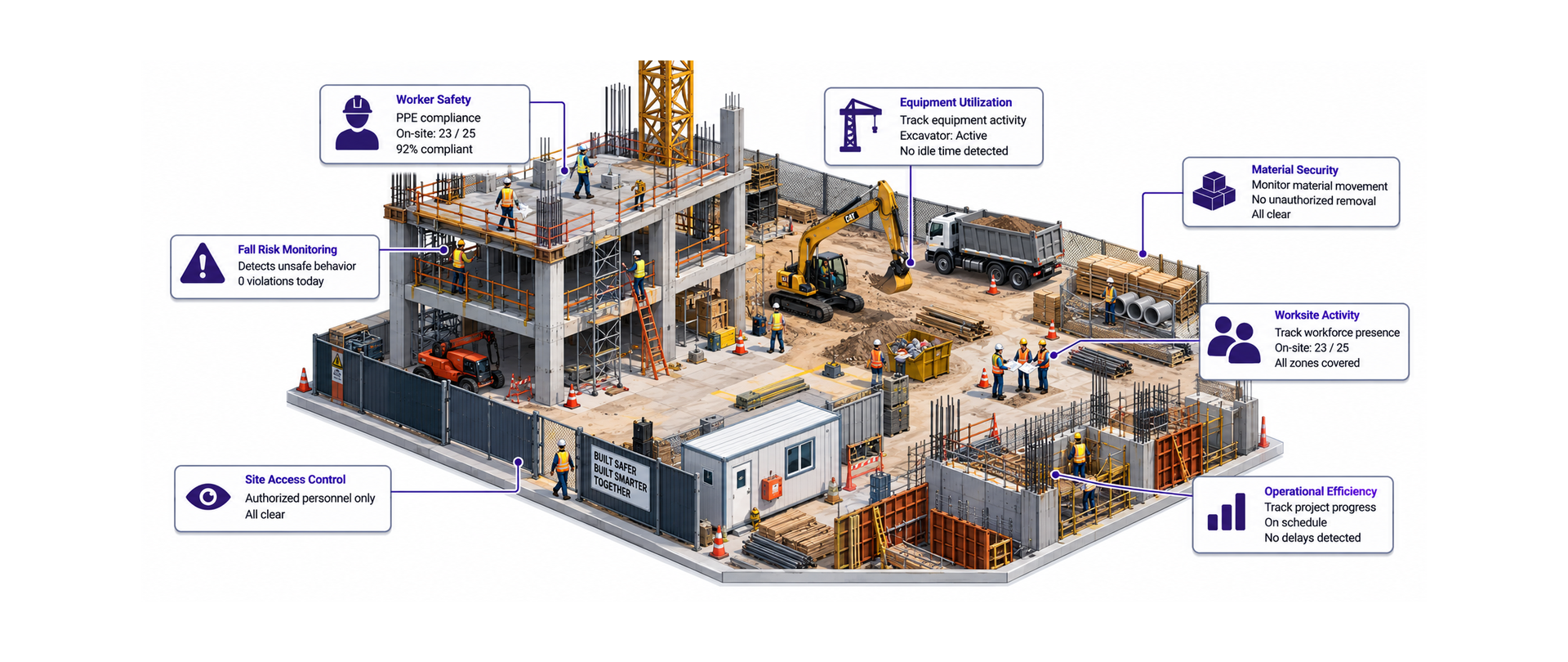
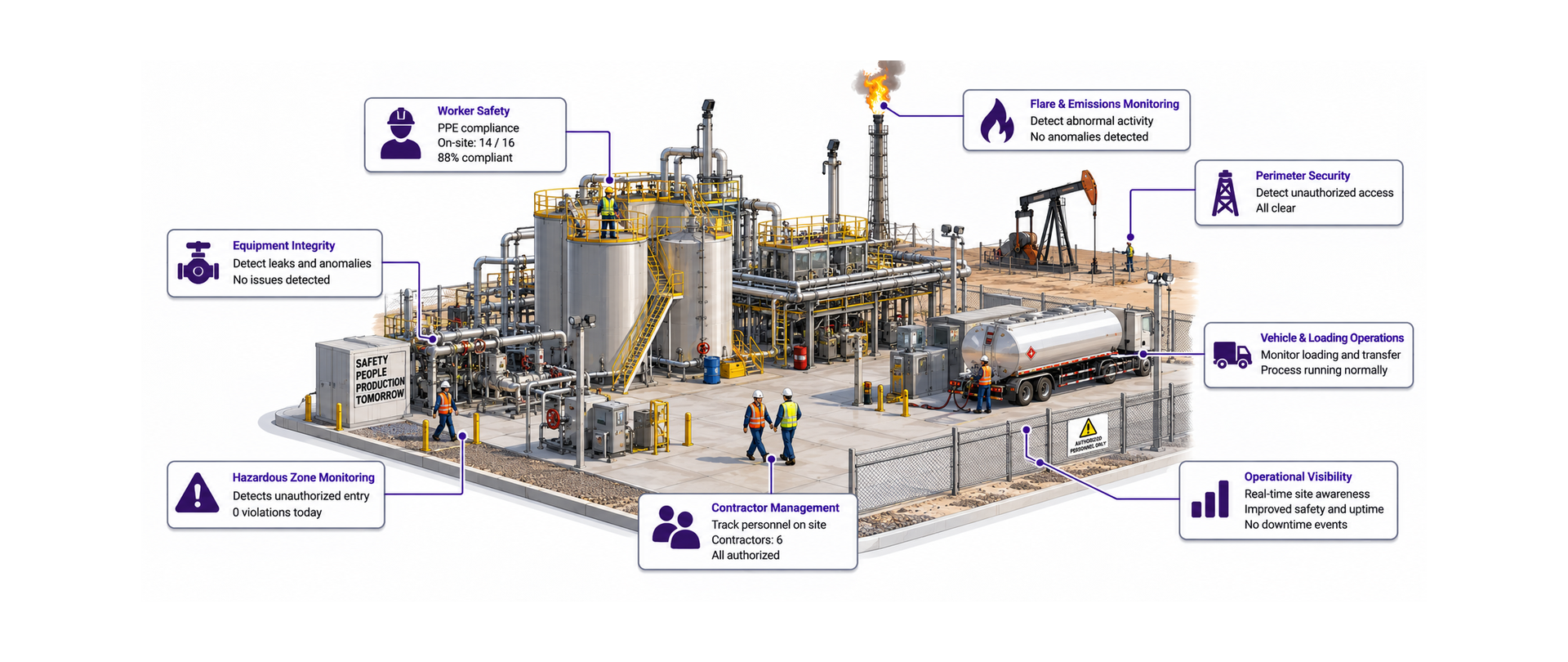
Trusted by ops & safety leaders across warehousing, healthcare, oil & gas, manufacturing, and construction.

7-Step Framework For a Risk-free POC

Before embarking on any AI computer vision or intelligent detection project, work through each step with your internal team before any proof-of-concept. This conversation separates successful deployments from costly experiments.

1

Define the problem clearly

What operational or safety issue are you trying to improve?

  • What’s happening today?
  • How often does it occur?
  • What is the impact (risk, cost, delays, compliance)?
Example: “Forklift and pedestrian near-misses in high-traffic zones during peak shifts.”
2

Identify the moments that matter

Where should the system focus?

  • Specific locations (zones, rooms, lines)
  • Specific behaviors or conditions
  • Specific times (shift changes, overnight, peak hours)
Example: “Dock doors 3–7 during morning loading (6–10 AM).”
3

Define success metrics (be specific)

What does “working” actually mean? Choose 2–4 measurable outcomes:

  • Detection accuracy (%)
  • Reduction in incidents (%)
  • Response time improvement
  • Reduction in manual checks
  • Increased compliance visibility
Example: Detect 90%+ of unsafe proximity events · Reduce manual monitoring by 50% · Alert within 60 seconds.
4

Establish a baseline

What is your current state?

  • How are issues identified today?
  • How long does it take to respond?
  • What’s being missed?
Example: “Incidents identified via manual review hours or days later.”
5

Define the workflow after detection

What should happen when something is detected?

  • Who gets notified?
  • What action should be taken?
  • What does resolution look like?
Example: “Supervisor receives alert → verifies → corrects behavior within 5 minutes.”
6

Set a realistic timeline

POCs are not long-term deployments. They’re focused tests.

  • Typical duration: 2–3 weeks
  • What should be proven by the end?
Example: “Validate detection accuracy and operational impact within 30 days.”
7

Define what happens next

If the POC is successful:

  • Where do you scale next?
  • What budget or approval is needed?
  • Who owns the rollout?
Why this matters: A POC without a path to production is a demo. Answering this upfront protects the investment.

POC Success Checklist

Before you start, confirm every box is checked. If even one is missing, the pilot is at risk.

✓Clear problem defined
✓Specific use cases identified
✓Measurable success criteria agreed
✓Baseline understood
✓Action workflow defined
✓Stakeholders aligned

Start your POC with rules that already work. 

You’ve defined what success looks like. These are the rules Rainscales has already tested.  Pick your industry, choose the risks that matter, and Rainscales tunes the thresholds to your site.

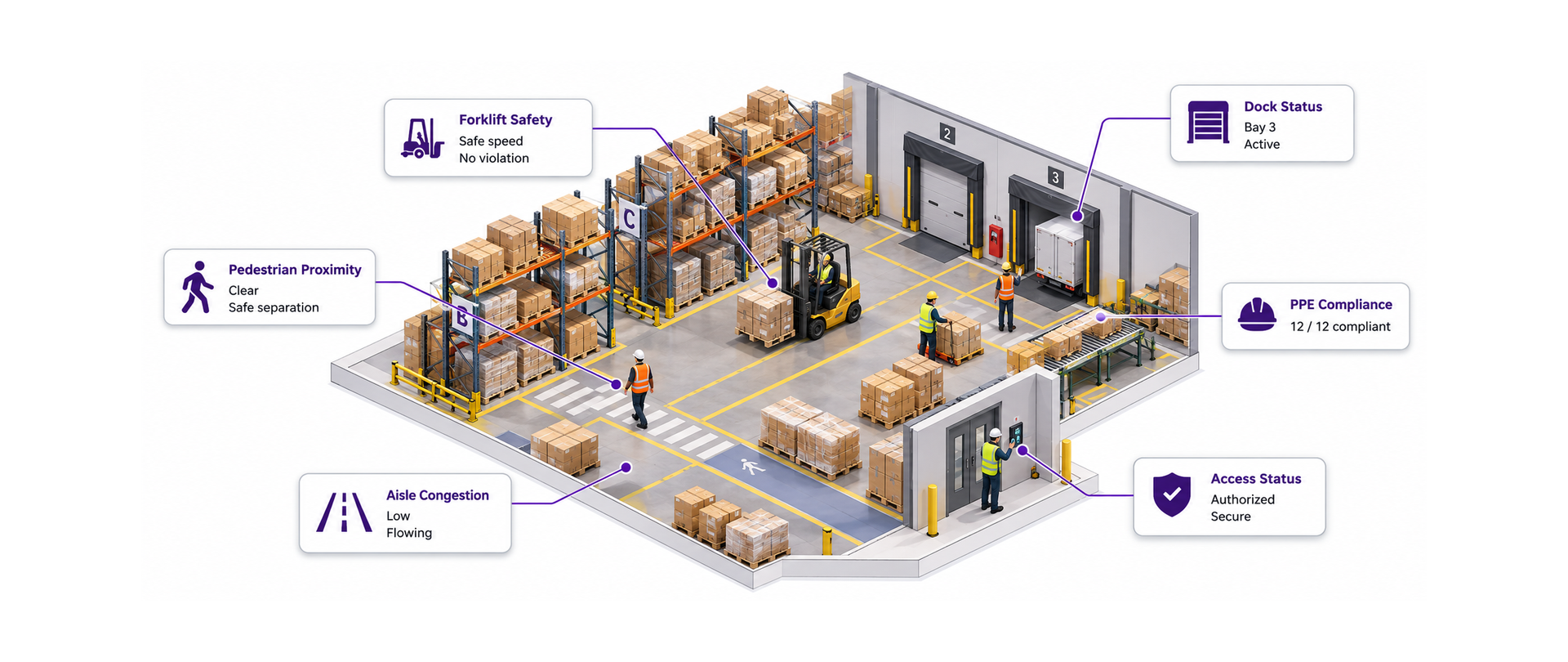
Warehouse with forklift, pedestrian, dock, and PPE detection callouts

19 proven rules ready for your Warehouse & 3PL POC

Forklifts & vehicles
  • Unsafe distance from moving equipment
  • Not slowing or stopping at crossings
  • Traveling with a raised load
  • Overloaded movement
  • More than one rider on a forklift
  • Phone use while operating equipment
Pedestrians
  • Walking outside walkways
  • Red zone intrusion
  • Climbing or jumping off docks
  • Standing on stacked pallets or bags
PPE
  • Missing hard hat
  • Missing hi-vis vest
  • Driver or helper without full PPE
Procedures
  • Prolonged inactivity
  • Phone use in no-phone areas
  • Safety meeting attendance & duration
  • Alcohol test completion
Housekeeping
  • Pallets left on the floor
  • Pallets in the wrong location

Suggested POC goals

Operational efficiencyReduce congestion events by X% · Improve dock turnaround time · Identify bottlenecks in real time
SafetyDetect near-misses with >90% accuracy · Reduce unsafe interactions by X% · Improve incident response time
VisibilityReplace manual checks with automated monitoring · Get real-time alerts in place of delayed reports
Example POC definition“Monitor forklift/pedestrian interactions in Dock Area A during peak hours to reduce near-misses and improve response time.”

Don't see your risk?

Every POC includes person and vehicle detection and tracking as the foundation these rules run on. New rules are scoped during your POC workshop.

Pick my POC rules →

How to use this with your team

The worksheet works before, during, and after your first conversation with a vendor or internal stakeholder.

1

Establish your goals

Share it during our first call. It primes a sharper, more honest conversation, and surfaces any internal misalignment early.

2

Align on the call

Work through it together with your Rainscales expert.  Collaborative, not pitchy. You’ll learn more in 30 minutes than in three vendor demos.

3

Turn answers into an ROI narrative

The completed workshop becomes the basis of a POC proposal with clear success criteria, baseline, and path to scale.

Get started

Define success before you start the pilot.

Kick off your risk-free POC that includes industry goal templates designed to align with your industry.

Start My Risk-Free Proof-of-Concept

Enter your details and we’ll email it to you immediately.

Prefer a live walk-through? Book a 20-minute session with Rainscales →